
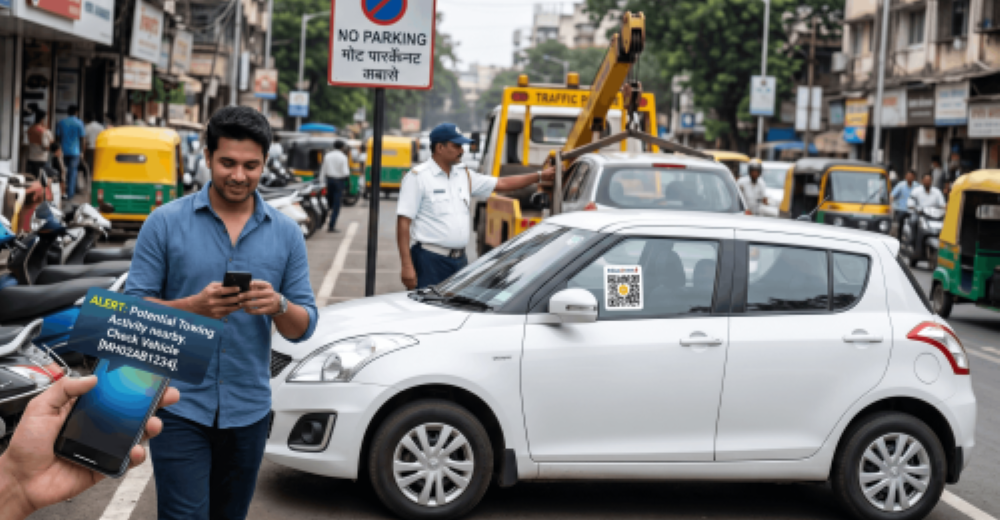
How to Avoid Parking Fines and Towing in Indian Cities — The Complete 2026 Guide
If you’ve ever returned to where you parked your car only to find a space and a sinking feeling in your stomach, you’re not alone. Towing is one of the most frustrating and expensive experiences for Indian vehicle owners.
Cities like Delhi, Mumbai, Bengaluru, and Hyderabad have significantly intensified their towing enforcement in recent years. Traffic police in Delhi alone tow thousands of vehicles every month. The fines are steep, the process is tedious, and the experience is stressful.
But here’s the good news: most towing incidents and parking fines are 100% avoidable. This guide walks you through everything you need to know — from understanding where not to park, to using modern technology that gives you a heads-up before the tow truck arrives.
Why Parking Violations Are So Common in India
India’s urban infrastructure has not kept pace with the explosive growth in vehicle ownership. Consider these realities:
- India adds over 20 million new vehicles every year, according to MORTH data.
- Major metros have a severe parking space deficit — Mumbai alone needs over 1.2 million parking spaces more than currently available.
- Most residential areas were designed without dedicated parking in mind.
- Commercial zones are almost always over-parked during business hours.
These structural problems force drivers to make difficult choices. But parking in the wrong place — even out of necessity — carries serious consequences.
What Are the Consequences of Wrong Parking in India?
Monetary Fines
Under the Motor Vehicles (Amendment) Act 2019, parking fines have been significantly increased. Depending on your city and the severity of the violation, fines can range from ₹500 to ₹2,000 or more. Repeat offences attract even steeper penalties.
Vehicle Towing
Municipal towing charges in Indian cities are significant. In Delhi, the towing fee is typically ₹1,500 to ₹2,000 for a car, plus daily storage charges if you don’t collect immediately. In Mumbai and Bengaluru, charges can be similar or higher.
Inconvenience and Time Loss
Retrieving a towed vehicle requires visiting the impound yard, paying fines, showing documents, and spending hours in queues. For many working professionals, this translates to losing an entire workday.
Vehicle Damage
Towing isn’t always gentle. Improper hooking during towing can cause bumper damage, scratches, or harm to the undercarriage — leading to additional repair costs that are rarely compensated.
Top Rules for Avoiding Parking Fines in Indian Cities
1. Never Park Within 5 Metres of an Intersection
This is one of the most commonly violated rules. Indian traffic rules prohibit parking near intersections, pedestrian crossings, and bus stops. These zones are actively monitored, especially in metro cities.
2. Avoid No-Parking Zones — Even Briefly
The ‘I’ll just be 5 minutes’ mindset is how most towing incidents begin. Tow trucks in cities like Delhi operate quickly. If a no-parking sign is visible, treat it as absolute — regardless of how short your stop is.
3. Check for Towing Enforcement Schedules
Many cities conduct drives on specific days or in specific areas. In Delhi, the New Traffic Management Plan designates specific roads as active enforcement zones. Checking local traffic authority announcements before parking in a new area is a smart habit.
4. Use Designated Parking Facilities
Multi-level parking facilities, authorised parking zones, and pay-and-park areas are available in most major cities. While they cost money, they eliminate the risk of fines and towing entirely. Apps like Just Park and Park Whiz can help you find nearby spots.
5. Display Correct Parking Permissions
Resident parking stickers, company parking permits, and handicapped zone permits must be correctly displayed. An expired or incorrectly placed permit can result in fines despite having the right to park.
The Modern Solution: Real-Time Parking Alerts
Even when you park correctly and carefully, situations change. Someone may need to get past your car. You might have accidentally blocked a service entrance. This is where technology fills the gap that rules cannot.
Smart QR vehicle tags like Scan it Up create a direct, anonymous communication channel between anyone near your vehicle and you. Here’s how this changes the parking game:
- A neighbor, security guard, or passerby spots an issue with your parked vehicle.
- They scan your Scan it Up QR tag — no app needed on their end.
- You receive an instant push notification on your phone: ‘Parking Alert — Move your vehicle immediately.’
- You can act before a towing service is called or a fine is issued.
In many cases, the few minutes between an alert and a towing call are the difference between driving away freely and spending the afternoon at an impound yard.
City-Specific Parking Tips for Indian Drivers
Delhi NCR
Delhi Traffic Police operates dedicated towing teams in areas like Connaught Place, Lajpat Nagar, Karol Bagh, and South Extension. Avoid parking on main arterial roads during peak hours. The integrated traffic management system includes CCTV monitoring in high-traffic areas.
Mumbai
Mumbai’s traffic police is particularly strict in areas like Bandra, Andheri, and Dadar. Flyover underpasses, which seem like easy parking spots, are almost always under surveillance. The BMC also has special drives in market areas during weekends.
Bengaluru
BBMP’s parking enforcement has intensified with Bengaluru’s rapid IT expansion. Areas around Koramangala, Indiranagar, and MG Road are high-risk zones. Always use designated parking in commercial areas.
Hyderabad & Chennai
Both cities have increased enforcement around commercial districts. In Chennai especially, Marina Beach Road and Anna Salai have regular enforcement drives. Hyderabad’s TSRTC bus routes have strict no-parking enforcement.
Emergency Tip: What to Do If Your Vehicle Is Towed
- Contact your local traffic police helpline immediately to locate your vehicle.
- Carry your RC (Registration Certificate), driver’s licence, and insurance documents.
- Pay the fine and towing charges at the impound yard.
- File a complaint if there is unexplained damage to your vehicle.
- Inspect your vehicle carefully before accepting it — document any damage.
Conclusion: Be Proactive, Not Reactive
Parking fines and towing in Indian cities are a daily reality, but they don’t have to be your reality. By combining smart parking habits with modern technology, you can dramatically reduce your risk of penalties, towing, and vehicle damage.
A Scan it Up QR vehicle tag is the simplest, most affordable layer of protection you can add to your vehicle today — one that works silently, privately, and instantly whenever your vehicle needs your attention.

Frequently Asked Questions
Q: Can I contest a wrongful towing in India?
A: Yes. If your vehicle was towed from a legal parking spot, you can file a complaint with the traffic police authority or approach the concerned traffic court. Gather evidence such as photos of the parking location and signage — or lack thereof — before paying the fine to preserve your right to contest.
Q: How much does it cost to retrieve a towed vehicle in Delhi?
A: In Delhi, the standard towing charge is approximately ₹1,500 for a car, plus ₹100-200 per day in storage charges. Additional penalties under the Motor Vehicles Act apply. Total costs can easily reach ₹2,500 to ₹4,000 for a single incident.
Q: Does a QR vehicle tag actually prevent towing?
A: A QR vehicle tag like Scan it Up does not directly prevent towing, but it gives you a critical time advantage. When a bystander, neighbour, or security guard scans your tag before the towing truck arrives, you can move your vehicle in time. Thousands of Scan it Up users have avoided towing through this real-time alert system.
Q: Who is responsible if my car is damaged during the towing process?
A: Legally, the towing agency or traffic police are responsible for the safe handling of your vehicle. If your car is damaged due to negligence during towing, you can claim compensation. It is vital to take photos of your vehicle’s condition at the towing pound before moving it to prove the damage occurred while in their custody.
Q: Will a stranger be able to see my phone number if they scan my QR tag?
A: No. Privacy is the priority. When someone scans your Scan it Up tag, they can send you a notification or an anonymous message through the platform. Your mobile number remains hidden unless you explicitly choose to share it, ensuring you receive the alert without compromising your personal data.
