
Table of Contents
- Introduction: The Broken System of Vehicle Communication in India
- What Is a Car Sampark Tag?
- How Smart Vehicle QR Tags Work
- Why Vehicle Owners Are Searching for NGF132 Alternatives
- Traditional Parking Notes vs Smart QR Vehicle Tags
- Real-World Use Cases for Smart QR Vehicle Tags
- Smart Parking Solutions for Indian Cities
- Why Privacy-Protected Vehicle Communication Matters
- How Scan It Up Builds a Smarter Vehicle Safety Ecosystem
- The Future of Smart Vehicle Communication in India
- Frequently Asked Questions
Introduction: The Broken System of Vehicle Communication in India
India has over 340 million registered vehicles — and virtually zero infrastructure for vehicle-to-owner communication when a car is parked. Think about how absurd that is. We live in a country where you can send ₹50,000 via UPI in three seconds, order groceries to your doorstep in ten minutes, and file your income tax from your phone — but if someone double-parks behind your car in a busy Bangalore market, your only option is to stand there honking like it is 1997.
The traditional “solution” has been a handwritten parking note on the dashboard — a scrap of paper with your phone number, exposed to every stranger who walks by. This system is not just outdated; it is fundamentally broken. It exposes your personal mobile number to spam callers, telemarketers, and anyone with bad intentions. It fails in rain. It blows away in wind. And it relies on the assumption that the person who needs to reach you will actually bother to call a stranger’s number scribbled on a piece of paper.
This is exactly the problem that modern car sampark tags — smart QR-based vehicle communication systems — were designed to solve. And it is why a growing category of products including NGF132, LetzScan, and more advanced platforms like Scan It Up have emerged to digitize the way Indian vehicle owners connect with the people around their parked cars.
But not all solutions are created equal. In this comprehensive guide, we break down how smart QR code vehicle contact tags work, compare the leading platforms head-to-head, and explain why the future of vehicle communication in India belongs to privacy-first, ecosystem-driven smart tags — not simple QR stickers with a phone number behind them.
What Is a Car Sampark Tag?
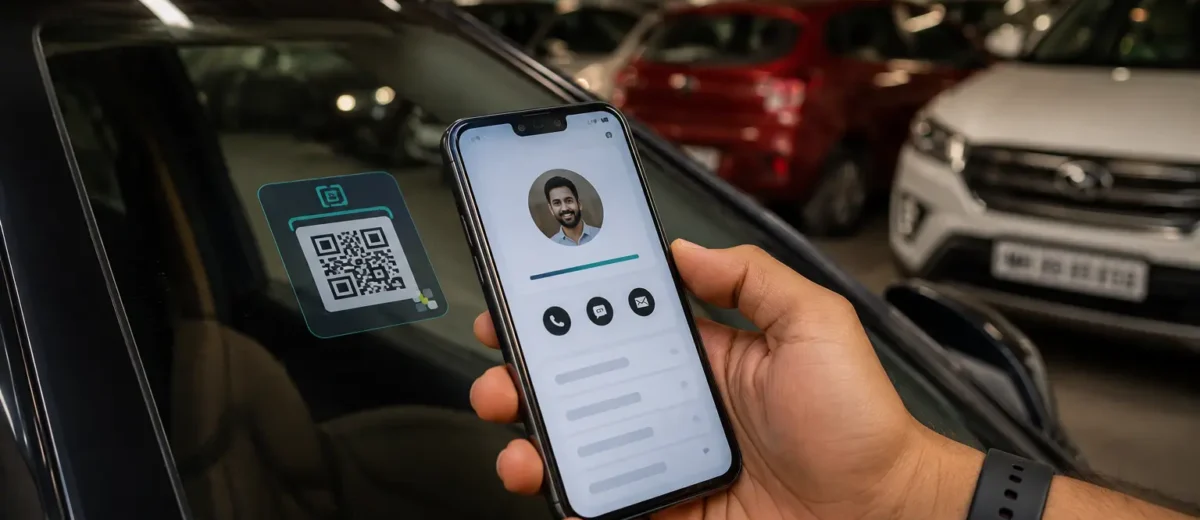
A car sampark tag — literally translated as a “vehicle contact tag” — is a QR code-based sticker or tag placed on a vehicle’s windshield, dashboard, or body panel. When scanned by any smartphone camera, it instantly connects the scanner with the vehicle owner through a digital communication channel — without requiring either party to exchange personal phone numbers.
The concept gained serious traction in India around 2022–2023 as urban parking chaos reached critical mass. Early movers in the space, including platforms like NGF132 (available at ngf132.com) and LetzScan, popularized the idea of replacing handwritten parking notes with scannable QR codes. The premise was simple: stick a QR code on your car, and anyone who needs to reach you — whether you are blocking their exit, left your headlights on, or your car is being towed — can scan it and send you a message instantly.
The Evolution of Vehicle Contact Systems
The car sampark tag concept has evolved through three distinct generations:
Generation 1: Static QR Codes (2020–2022) The earliest versions were essentially glorified business cards. A QR code linked to a static webpage displaying the owner’s phone number. While marginally better than a handwritten note, these offered zero privacy protection — your number was still fully exposed to anyone who scanned the code.
Generation 2: Basic Communication Platforms (2022–2024) Products like NGF132 and LetzScan introduced masked communication — the scanner could send a message or notification to the vehicle owner without seeing their actual phone number. This was a significant leap forward in privacy-protected vehicle tag technology, and it established the core value proposition that drives the category today.
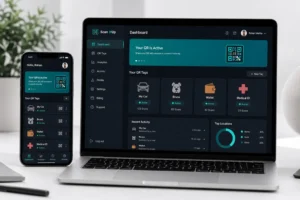
Generation 3: Ecosystem-Driven Smart Tags (2024–Present) The current generation — led by platforms like Scan It Up — goes far beyond basic QR-to-notification functionality. Modern smart vehicle parking tags are part of a broader digital safety ecosystem that includes emergency IDs, multi-asset tagging (vehicles, pets, valuables), recovery dashboards, WhatsApp integration, and intelligent alert routing. The QR tag on your windshield is no longer just a contact mechanism — it is an entry point into a connected vehicle safety platform.
How Smart Vehicle QR Tags Work
Understanding the technology behind a QR code vehicle contact tag helps explain why some platforms deliver dramatically better experiences than others. Here is the complete workflow:
Step 1: Tag Registration and Profile Creation
The vehicle owner creates an account on the platform (such as Scan It Up), registers their vehicle, and generates a unique QR code. During registration, they configure:
- Contact preferences — phone call, WhatsApp, SMS, or anonymous messaging
- Privacy settings — whether to show, mask, or completely hide their phone number
- Vehicle details — make, model, colour, registration number (optional)
- Emergency information — alternate contacts, medical conditions, insurance details
- Custom messages — instructions for specific scenarios (“If my headlights are on, please message me”)
Step 2: Physical Tag Placement
The generated QR code is printed as a weatherproof QR parking sticker and placed on the vehicle — typically on the inside of the windshield, the rear window, or on the dashboard. Premium platforms like Scan It Up offer 29+ professionally designed sticker templates with clear multilingual “SCAN ME” instructions that make the tag immediately recognizable and actionable.
Step 3: Instant Scan-to-Contact Communication
When someone needs to reach the vehicle owner, they simply point their smartphone camera at the QR tag. No app download required. The scanner lands on a clean, mobile-optimized web page where they can:
- Tap to call the owner (with number masked, if enabled)
- Send a WhatsApp message directly
- Submit an anonymous message through a secure web form
- Trigger an emergency alert if the situation is urgent
Step 4: Real-Time Owner Notification
The vehicle owner receives an instant parking alert — via push notification, SMS, WhatsApp, or email — the moment someone scans their tag. Advanced platforms include the scanner’s approximate GPS location and a timestamp, giving the owner full context about what is happening with their vehicle, even if they are floors away in a shopping mall or inside an office building.
The Critical Differentiator: Privacy-First Communication
The entire value of a smart QR vehicle tag collapses if it simply exposes your phone number to strangers. The best platforms in this space — and this is where generational differences become stark — implement true anonymous vehicle contact systems where neither party needs to reveal personal information to communicate effectively. The scanner does not see the owner’s number. The owner does not see the scanner’s number. Communication flows through a secure intermediary layer.
Why Vehicle Owners Are Searching for NGF132 Alternatives
If you have arrived at this article by searching for NGF132, ngf132.com, or LetzScan alternatives, you are not alone. Search data from 2025–2026 reveals a significant spike in comparison queries as vehicle owners who adopted first-generation car sampark tags begin evaluating more advanced options. Here is why:
1. Modern UI/UX Expectations Have Evolved
Indian consumers in 2026 expect every digital product to feel as polished as Zomato, Zerodha, or PhonePe. Early vehicle QR tag India platforms were built as functional MVPs — they solved the core problem, but the user interfaces often feel dated compared to the design standards that Indian smartphone users now take for granted. Vehicle owners want scan pages that load instantly, look professional, and inspire confidence in the stranger scanning the tag.
2. Smart Emergency Features Are Now Table Stakes
A basic “message the owner” notification is no longer sufficient. Modern vehicle owners expect their emergency vehicle contact tag to handle critical scenarios: accident alerts that notify emergency contacts, medical information displays for first responders, insurance details for on-scene documentation, and multi-channel alert routing that ensures the notification reaches someone even if the primary owner is unreachable.
3. Digital Ecosystem Advantages
First-generation QR tag platforms typically offered a single product: a vehicle sticker. But vehicle owners also have pets, carry wallets, own laptops, and travel with luggage. Platforms like Scan It Up that offer a unified tagging ecosystem — where one account and one dashboard manages QR tags across vehicles, pets, medical IDs, valuables, and business assets — provide dramatically more value than a standalone vehicle-only solution.
4. Better QR Scan Workflows
The scan experience matters enormously. If a stranger scans your QR parking sticker and lands on a confusing page, a broken link, or a page that asks them to download an app before they can contact you, the entire system fails. The best modern platforms deliver a zero-friction scan experience: instant page load, clear contact options, no app requirements, and multilingual support for India’s diverse user base.
5. WhatsApp-Native Communication
In India, WhatsApp is not just a messaging app — it is the primary communication infrastructure for 500+ million people. Vehicle QR systems that route communication through WhatsApp — rather than proprietary messaging systems or plain SMS — see dramatically higher response rates because both parties are communicating on a platform they already trust and use hourly.
Traditional Parking Notes vs Smart QR Vehicle Tags
For vehicle owners still on the fence about upgrading from a handwritten parking note to a smart vehicle parking tag, this comparison makes the decision clear:
| Feature | Handwritten Parking Note | Basic QR Tag (Gen 1-2) | Smart QR Tag (Scan It Up) |
| Privacy Protection | ❌ Phone number fully exposed | ⚠️ Basic masking on some platforms | ✅ Full privacy mode — number completely hidden |
| Weather Resistance | ❌ Destroyed by rain, sun, wind | ✅ Weatherproof sticker | ✅ Premium weatherproof + UV-resistant material |
| Contact Speed | ❌ Requires manual dialling | ✅ Scan and message (30 seconds) | ✅ Scan, tap, connected (10 seconds) |
| Spam Prevention | ❌ Number visible to all passersby | ⚠️ Partial — depends on platform | ✅ Zero spam — all contact routed through secure system |
| Emergency Features | ❌ None | ❌ Limited or none | ✅ Emergency contacts, medical info, accident alerts |
| WhatsApp Integration | ❌ Manual only | ⚠️ Some platforms | ✅ Native WhatsApp tap-to-message |
| Multi-Vehicle Support | ❌ Must write new note each time | ⚠️ Separate tags, limited dashboard | ✅ Unified dashboard for all vehicles |
| Scan Location Tracking | ❌ None | ⚠️ Basic on some platforms | ✅ GPS location + timestamp of every scan |
| Works Without Internet | ✅ It is paper | ❌ Requires data connection | ⚠️ Requires data (but optimised for low-bandwidth) |
| Cost | ✅ Free (pen and paper) | ₹100–300 per tag | ✅ First tag completely free |
| Night Visibility | ❌ Invisible in dark | ⚠️ Depends on sticker design | ✅ Reflective sticker options available |
| Updatable Information | ❌ Must write a new note | ⚠️ Limited editing on some platforms | ✅ Fully editable profile — same QR, updated info |
The difference is not incremental — it is generational. A handwritten parking note is a 1990s solution. A basic QR sticker is a 2022 solution. A connected smart vehicle tag ecosystem is a 2026 solution.
Replace paper parking notes with smart QR communication
Real-World Use Cases for Smart QR Vehicle Tags
The true power of a smart QR vehicle tag becomes clear when you see the sheer range of everyday scenarios it handles — situations that every Indian vehicle owner has experienced but had no efficient way to resolve.
Use Case 1: Wrong Parking and Double Parking
The scenario: You have double-parked outside a medical store for “just two minutes” — which turned into twenty. The car behind you is now trapped, and the driver is furious.
Without a QR tag: The blocked driver honks endlessly, asks every shop owner “whose car is this?”, and eventually calls the traffic police. You return to find a crowd, a fine, and maximum embarrassment.
With a smart QR tag: The blocked driver scans the QR sticker on your windshield, taps “Send Message,” and you receive an instant notification: “Your car is blocking mine at MG Road medical store. Please move.” You are back in 90 seconds. No honking. No crowd. No fine.
Use Case 2: Headlights Left On
The scenario: You parked at the office at 9 AM and accidentally left your headlights on. By 6 PM, your battery is completely dead.
Without a QR tag: You discover the dead battery at the end of a long workday. You spend 45 minutes finding someone with jumper cables in the parking lot.
With a smart QR tag: A colleague walking past your car at 10 AM notices the headlights, scans your tag, and sends a quick alert. You walk down and switch them off. Battery saved. Evening saved.
Use Case 3: Towing Alerts
The scenario: Your car is parked in a zone where the municipal corporation has decided to conduct an unexpected tow drive.
Without a QR tag: You exit the restaurant to find an empty parking spot and spend the next three hours navigating the traffic police impound system to retrieve your vehicle, paying ₹2,000–5,000 in fines and towing charges.
With a smart QR tag: A passerby or even the towing crew themselves scan your tag and you receive an alert: “Your vehicle is being towed from Brigade Road.” You sprint out and move it before it is loaded onto the truck.
Use Case 4: Flat Tire Warning
The scenario: Your rear tire is visibly deflating in the parking lot, and you are inside a cinema watching a three-hour film.
Without a QR tag: You return to find a completely flat tire, no nearby puncture shop open at 11 PM, and a very long night ahead.
With a smart QR tag: A kind stranger in the parking lot notices the deflating tire, scans the tag, and alerts you. You leave the movie, drive to the nearest tire shop with the tire still partially inflated, and avoid being stranded.
Use Case 5: Emergency Family Contact
The scenario: A vehicle owner suffers a medical emergency or is involved in an accident, and first responders need to contact their family immediately.
Without a QR tag: Police search the glove box for documents, try to unlock the phone, and spend hours identifying the owner and locating next of kin.
With a smart QR tag: First responders scan the QR tag on the windshield and instantly access emergency contact information, blood group, known allergies, and family phone numbers — all configured by the owner in advance. Critical medical decisions can be made within minutes, not hours.
Use Case 6: Apartment and Society Parking Disputes
The scenario: Someone has parked in your designated parking spot in your apartment complex. Again.
Without a QR tag: You post an angry message in the society WhatsApp group. Nobody claims the car. The security guard shrugs. You park on the street.
With a smart QR tag: You scan the QR tag on the offending vehicle, send a polite message through the secure system, and the owner receives an instant notification. The car is moved within minutes — no WhatsApp group drama, no confrontation.
Use Case 7: Office Parking Communication
The scenario: In shared office parking lots with limited spaces, vehicles constantly need to be reshuffled as people arrive and leave at different times.
Without a QR tag: The office WhatsApp group becomes a chaotic stream of “Whose white Creta is blocking the exit?” messages. Half the office does not respond because they have muted the group.
With a smart QR tag: Direct, instant, one-to-one communication between the person who needs the car moved and the owner — no group spam, no wasted time, no public shaming.
Smart Parking Solutions for Indian Cities
India’s urban landscape is in the grip of a parking crisis. According to the Ministry of Housing and Urban Affairs, Indian metro cities have parking infrastructure for only 10–15% of their registered vehicles. Delhi alone adds over 1,400 new cars every single day — yet its parking capacity has not meaningfully expanded in a decade. The result is a daily war for space that breeds road rage, wastes fuel, increases emissions, and costs the Indian economy an estimated ₹60,000 crore annually in lost productivity from traffic congestion.
How Smart Vehicle Communication Fits Into Smart City Infrastructure
The Indian government’s Smart Cities Mission — covering 100 cities with a combined investment exceeding ₹2 lakh crore — explicitly identifies intelligent parking management as a core infrastructure pillar. But while the mission focuses on sensor-based parking guidance systems and automated parking structures, it overlooks a fundamental layer: vehicle-to-owner communication.
A sensor can tell you that a parking spot is occupied. But it cannot tell the vehicle owner that their car is being towed, that they left their sunroof open during a downpour, or that a delivery truck needs them to move forward by three feet. This “last-mile communication” layer is exactly where smart QR vehicle tags become essential infrastructure — not just personal convenience gadgets.
The Integration Opportunity
Forward-thinking smart parking solutions in India are beginning to integrate QR-based vehicle communication into their platforms. Imagine a municipal parking system where:
- Every parked vehicle has a scannable QR parking sticker that links to a secure communication channel
- Parking enforcement officers can notify owners digitally before issuing fines
- Towing crews can alert owners in real-time, giving them a window to move their vehicles
- Adjacent vehicle owners can communicate about spacing issues without confrontation
- Emergency services can instantly identify vehicle owners during incidents
This is not a futuristic fantasy — it is a logical extension of the technology that platforms like Scan It Up already provide at the individual vehicle level. The infrastructure for a smart parking solution India needs already exists in every smartphone camera in the country. What is needed is adoption, standardization, and integration.
Urban Mobility and Digital Vehicle Communication
The concept of digital vehicle communication extends beyond parking. As Indian cities experiment with congestion pricing, low-emission zones, and dynamic traffic management, the ability to communicate with vehicle owners in real-time becomes increasingly valuable. A vehicle communication system built on universally scannable QR tags provides a low-cost, high-reach communication layer that requires zero hardware installation — unlike Bluetooth beacons, NFC sensors, or dedicated parking apps that fragment the user experience across dozens of incompatible platforms.
Why Privacy-Protected Vehicle Communication Matters
Here is a statistic that should alarm every vehicle owner in India: the average Indian mobile user receives 25+ spam calls per month, according to Truecaller’s 2025 India Spam Report. India consistently ranks as the most spam-called country on Earth. And every time you write your phone number on a parking note, display it on a dashboard card, or expose it through a poorly designed QR system, you are feeding that spam machine.
The Real Cost of Exposed Phone Numbers
When your number is visible on your parked car, it is not just available to the one person who legitimately needs to reach you. It is visible to:
- Spam callers and telemarketers who systematically collect numbers from parked vehicles in commercial areas
- Scam operators who can use your number combined with your vehicle registration (also visible) for identity fraud
- Stalkers and bad actors who can track your daily parking patterns and connect them to your personal identity
- Data brokers who aggregate and sell personal information harvested from public sources
A privacy-protected vehicle tag eliminates this entire attack surface. When communication is routed through a secure intermediary — as it is with properly designed platforms like Scan It Up — your phone number never leaves the system. The scanner communicates with you, not your phone number. The distinction is critical.
Anonymous Communication Without Compromising Functionality
The genius of modern anonymous vehicle contact systems is that they provide complete privacy without sacrificing communication quality. The scanner can still:
- Send you a detailed message explaining why they need you
- Share a photo (e.g., showing your headlights are on or your tire is flat)
- Receive your response in real-time
- Call you through a masked number relay (if you enable it)
You get full functionality. They get full functionality. Nobody’s personal data is compromised. This is the standard that every vehicle QR tag India platform should meet — and the standard by which you should evaluate any smart parking tag before putting it on your windshield.
Digital Identity Protection in the Age of Data Breaches
In 2025, India reported over 1.3 million cybercrime complaints — a 300% increase from 2021. Data breaches at major companies exposed hundreds of millions of Indian phone numbers and personal records. In this environment, voluntarily making your phone number publicly visible on your parked car — 24 hours a day, 365 days a year — is a security liability that no informed vehicle owner should accept.
Modern smart mobility solutions must be built with privacy as a foundational principle, not an afterthought. This means end-to-end communication masking, zero public exposure of personal data, user-controlled privacy settings, and transparent data handling policies.
How Scan It Up Builds a Smarter Vehicle Safety Ecosystem

While most car sampark tag platforms focus narrowly on parking communication, Scan It Up approaches vehicle safety as an interconnected ecosystem — not a single-feature product. Here is what sets it apart:
1. QR Vehicle Tags With Privacy-First Architecture
Every Scan It Up vehicle tag is built on a privacy-first foundation. Your phone number is never displayed to scanners unless you explicitly choose to show it. All communication flows through a secure, masked relay system. You control exactly what information is visible on your scan page — from basic “contact me” functionality to detailed vehicle profiles with emergency instructions.
2. Emergency ID Integration
Your vehicle QR tag is not just a parking communication tool — it doubles as a comprehensive emergency vehicle contact tag. Configure your profile with:
- Blood group and known allergies
- Emergency contact numbers (family, doctor)
- Insurance policy details
- Medical conditions relevant to first responders
- Preferred hospital information
In the event of an accident, a first responder scanning your windshield tag gets life-saving information instantly — no phone unlocking, no document searching, no time wasted.
3. Smart Recovery Systems
If your vehicle is stolen, Scan It Up’s recovery system activates a digital alert network. Every scan of your vehicle’s QR tag after you mark it as stolen triggers an immediate alert with the scanner’s location — effectively turning every smartphone in the country into a potential recovery beacon.
4. Connected Safety Ecosystem
This is where Scan It Up fundamentally diverges from standalone QR parking sticker solutions. Your vehicle tag exists within a broader ecosystem that includes:
- Pet tags — protect your pets with the same technology
- Valuable tags — laptops, bags, wallets, keys
- Medical ID tags — wearable emergency information
- Business asset tags — equipment and inventory tracking
One account. One dashboard. One unified system for everything you want to protect. No other vehicle QR tag platform in India offers this level of ecosystem integration.
5. Modern UI/UX That Builds Trust
The scan page — the page a stranger sees when they scan your tag — is arguably the most important touchpoint in the entire system. If it looks unprofessional, loads slowly, or confuses the scanner, the communication fails before it begins.
Scan It Up’s scan pages are designed with the same attention to detail as a premium app interface:
- Instant load times optimised for Indian mobile networks
- Clean, intuitive layout with clear call-to-action buttons
- Multilingual support for Hindi, English, and regional languages
- Professional visual design that signals legitimacy and trust
- Zero app download requirements — works entirely in the mobile browser
6. WhatsApp-Native Communication
In a country where WhatsApp is the default communication tool for 500+ million users, Scan It Up’s deep WhatsApp integration is not a feature — it is a requirement. Scanners can tap a single button to open a pre-populated WhatsApp message to the vehicle owner. No typing, no confusion, no friction. The owner receives the message on the app they already check 50+ times per day.
7. 29+ Premium Sticker Designs
First impressions matter. A generic black-and-white QR code on your windshield looks like a tech experiment. Scan It Up offers 29+ professionally designed sticker templates — including sleek minimal designs, vibrant colourful options, and designs with clear multilingual “SCAN ME” instructions — that make your tag look intentional, premium, and immediately scannable.
The Future of Smart Vehicle Communication in India
The convergence of several technological and regulatory trends points to a future where smart QR vehicle tags become as standard as vehicle insurance — not optional accessories, but essential components of responsible vehicle ownership.
AI-Powered QR Systems
The next generation of vehicle communication systems will incorporate artificial intelligence to deliver context-aware responses. Imagine a QR tag system that:
- Automatically detects whether a scan is happening during business hours or late at night and adjusts the urgency of notifications accordingly
- Uses AI to analyse scan patterns and alert you to suspicious activity (e.g., multiple scans in a short period at an unusual location)
- Provides automated responses to common scenarios (“The owner has been notified and will arrive in approximately 5 minutes”)
- Integrates with vehicle telemetry to proactively alert nearby scanners if the car alarm has been triggered
Connected Mobility Ecosystems
As Indian cities deploy smart traffic management systems, connected vehicle platforms, and digital mobility infrastructure, QR-based vehicle identification will serve as a universal bridge between physical vehicles and digital systems. Your smart vehicle parking tag could become your vehicle’s digital identity — interfacing with municipal parking systems, toll collection, insurance platforms, and emergency services through a single scannable code.
Digital Emergency Response Networks
India’s emergency response infrastructure is evolving rapidly. The integration of QR code vehicle contact tags with platforms like the 112 emergency response system, highway patrol networks, and hospital trauma registries could create a seamless chain from accident detection to emergency contact notification to hospital arrival — with the vehicle’s QR tag serving as the critical data link at every stage.
Standardisation and Regulation
As the car sampark tag category matures, industry standardisation and potential regulatory support will accelerate adoption. We anticipate that smart vehicle identification tags could become recommended — or even mandatory — as part of vehicle registration processes within the next 3–5 years, similar to how FASTag became compulsory for toll collection.
Frequently Asked Questions
Q: What is NGF132 and how does it compare to other car sampark tags?
A: NGF132 (available at ngf132.com) is one of several QR-based vehicle communication platforms in India. It allows vehicle owners to place a QR sticker on their car so that people can scan it and contact them. While NGF132 helped popularise the car sampark tag concept, newer platforms like Scan It Up offer more advanced features including deeper privacy protection, emergency ID integration, WhatsApp-native communication, and a multi-asset tagging ecosystem.
Q: What is a car sampark tag and why do I need one?
A: A car sampark tag is a QR code sticker placed on your vehicle that allows anyone to scan it and contact you instantly — without seeing your personal phone number. You need one because it replaces unsafe handwritten parking notes, enables instant communication about parking issues, and can serve as an emergency contact system in case of accidents.
Q: Is Scan It Up better than LetzScan for vehicle QR tags?
A: Both platforms serve the core function of QR-based vehicle communication. However, Scan It Up differentiates itself with a broader ecosystem (vehicles, pets, medical IDs, valuables), privacy-first architecture, 29+ premium sticker designs, WhatsApp-native messaging, and emergency ID integration — features that go well beyond basic QR-to-notification functionality.
Q: How does a QR code vehicle contact tag protect my privacy?
A: A properly designed QR vehicle tag routes all communication through a secure intermediary system. When someone scans your tag, they see a contact page — not your phone number. They can message or call you through the platform, but your actual mobile number remains completely hidden unless you choose to reveal it.
Q: Can a smart vehicle parking tag help in emergencies?
A: Absolutely. Modern smart vehicle tags like Scan It Up allow you to store emergency information — blood group, allergies, emergency contact numbers, insurance details, and medical conditions — accessible via a simple QR scan. In an accident, this information can be life-saving for first responders who need to make critical decisions quickly.
Q: What is the difference between a QR parking sticker and a regular parking note?
A: A regular parking note is a piece of paper with your phone number that anyone can see, gets destroyed by weather, and offers zero privacy. A QR parking sticker is a durable, weatherproof tag that enables instant digital communication while keeping your phone number hidden. It also provides features like scan notifications, location tracking, and emergency information.
Q: Are vehicle QR tags popular in India?
A: Yes. The vehicle QR tag India market has grown rapidly since 2022, driven by increasing urban parking challenges, privacy concerns about exposed phone numbers, and growing QR code literacy thanks to UPI payment adoption. Major cities like Bangalore, Mumbai, Delhi, Pune, and Hyderabad have seen the highest adoption rates.
Q: How much does a smart QR vehicle tag cost?
A: Pricing varies by platform. Scan It Up offers the first tag completely free — you can create your account, generate your QR code, and design your sticker at zero cost. Additional tags and premium features are available through affordable paid plans. This makes it one of the most accessible smart parking solutions in India.
Q: Can I use one QR tag for multiple vehicles?
A: Each vehicle should have its own unique QR tag linked to its specific profile and emergency information. However, platforms like Scan It Up let you manage multiple vehicle tags from a single dashboard, making it easy to set up and monitor tags for your entire family’s vehicles.
Q: What happens if someone scans my vehicle QR tag at night or when I am sleeping?
A: You receive an instant notification (push notification, SMS, WhatsApp, or email) the moment your tag is scanned, regardless of the time. You can configure notification settings, set up auto-responses for off-hours, and designate alternate contacts who receive alerts when you are unavailable.
Q: Is a smart QR vehicle tag the same as a FASTag?
A: No. FASTag is an RFID-based system specifically designed for electronic toll collection on highways. A smart QR vehicle tag is a communication tool that enables anyone to contact you about your parked vehicle. They serve entirely different purposes, and you should have both on your vehicle.
Q: Can a QR vehicle tag help recover a stolen vehicle?
A: Yes. If you mark your vehicle as stolen on platforms like Scan It Up, every subsequent scan of your vehicle’s QR tag triggers an alert with the scanner’s GPS location. This effectively creates a distributed recovery network where every smartphone becomes a potential tracking device.
Q: Do I need to download an app to scan someone’s vehicle QR tag?
A: No. Modern smart QR vehicle tags like Scan It Up are designed to work entirely through the smartphone’s built-in camera and mobile browser. The person scanning your tag does not need to download any app — they simply point their camera, tap the link, and land on your secure contact page.
Q: How durable are QR vehicle tag stickers?
A: Premium QR parking stickers from platforms like Scan It Up are made from weatherproof, UV-resistant, waterproof materials designed to withstand Indian weather conditions — including monsoon rains, extreme summer heat, and dust storms. The QR code remains scannable even after months of outdoor exposure.
Q: Can I use a smart vehicle parking tag on a two-wheeler or motorcycle?
A: Yes. Smart QR vehicle tags work on any vehicle — cars, motorcycles, scooters, auto-rickshaws, trucks, and even bicycles. For two-wheelers, the sticker can be placed on the handlebar area, under the seat cover, or on the rear body panel, where it is visible and scannable.
Take the First Step Toward Smarter Vehicle Safety
Every day that your vehicle sits in a parking lot with nothing but a handwritten phone number on the dashboard — or worse, no contact information at all — is a day you are exposed to unnecessary risk. Privacy risk. Security risk. Emergency risk. And the completely avoidable risk of returning to a towed car, a dead battery, or a parking fine that a simple notification could have prevented.
The technology to eliminate all of these risks exists today. It costs nothing to start. And it takes less than two minutes to set up.
Create your free Scan It Up vehicle tag now →
Join the 1,20,000+ items already protected by Scan It Up’s smart QR ecosystem — and make sure that the next time someone needs to reach you about your car, they can do it instantly, privately, and without you ever knowing the frustration of a missed connection.
