
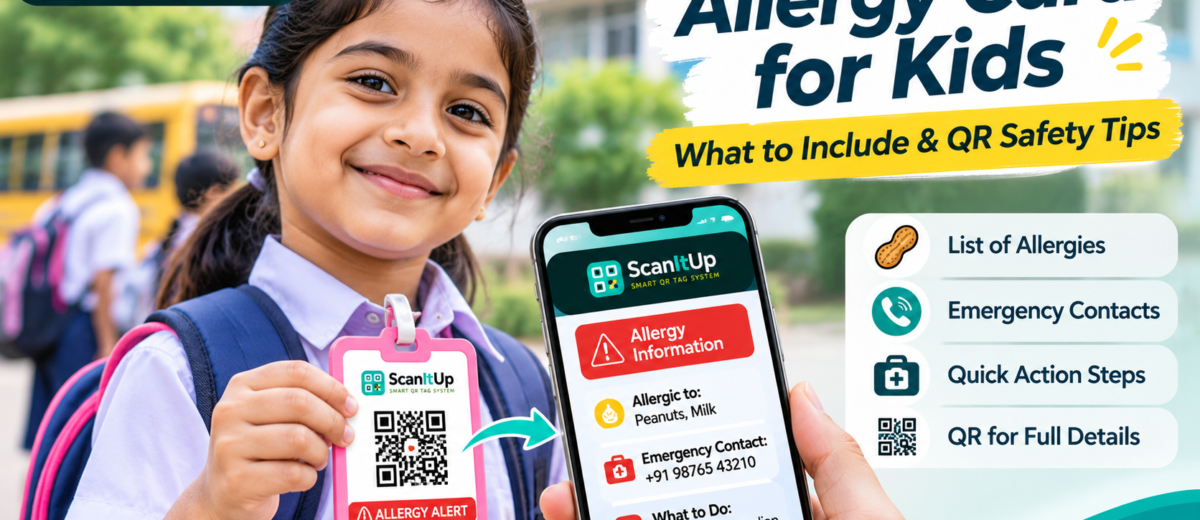
An allergy card for kids can help a teacher, coach, relative, or school-trip organiser recognise an important health warning without searching through messages or paperwork. But the card needs to be designed carefully. Too little information may be confusing; too much can expose a child’s private details. This guide explains what to include, how a QR tag can help, and why the family’s clinician-approved emergency plan must remain the foundation.
What an allergy card is—and what it is not
An allergy card is a short, readable summary of a child’s known allergies and the action adults should take if exposure is suspected. It is intended to help teachers, caregivers, relatives, and activity leaders find essential information quickly. It is not a diagnosis, a replacement for a clinician’s written allergy action plan, or permission for an untrained person to give medication. The best card is accurate, easy to read under pressure, and backed by a clear plan agreed with the child’s healthcare professional. A QR code can provide access to additional information, but critical instructions should remain visible even if the code cannot be scanned.
Which details belong on the front
Put the child’s preferred name, the specific confirmed allergen, and a concise emergency instruction on the printed card. If the child has been prescribed an adrenaline (epinephrine) auto-injector, follow the clinician’s written plan about where it is kept and who is trained to use it. Include a reliable emergency contact method, ideally through a privacy-conscious route. Avoid vague phrases such as ‘allergic to food’ when the relevant trigger is known. An allergy to peanuts is different from an allergy to milk, and the distinction matters for day-to-day prevention. Never invent an allergy based on a suspected reaction; get it assessed by an appropriate clinician.
Keep the medical action plan separate but accessible
Many schools already ask families for an allergy or emergency care plan. The card should point staff to that plan, not compete with it. Ask the treating clinician what symptoms require immediate emergency response, which medication has been prescribed, and whether additional steps apply to the child. Make sure the plan is shared with the school or caregiver through the appropriate channel. A short QR-linked page might tell staff where the full approved plan is held, but a page that depends on mobile data is not a reliable substitute for a printed or otherwise immediately available plan.
Why a QR code may help
A printed card has limited space. A QR-linked profile may make it easier to update a parent’s contact route or provide supplementary, non-sensitive information without reprinting every card. It may also be useful on a school-trip tag or a bag label where only a small amount of text fits. However, the person scanning needs a phone and usually internet access, and they may not know whether the linked information is current. A QR tag is best treated as a secondary access route. It does not detect allergens, identify symptoms, summon an ambulance automatically, or make medical decisions.
What not to put on a public QR page
A child’s full date of birth, home address, school timetable, identification numbers, and detailed medical history should not be exposed to every passerby. Public links can be photographed or shared. Use the minimum information required for the intended situation and check whether the QR service provides privacy controls. If a full action plan contains sensitive information, consider sharing it directly with authorised caregivers instead of posting it on an unrestricted webpage. Test the QR link in a private browser to see exactly what an unknown person can view.
How to make an allergy card for kids
Start with the clinician-confirmed allergy information and the current written action plan. Draft a front-facing card with large, high-contrast text: ‘ALLERGY ALERT’, the known trigger, and a short instruction directing adults to the child’s approved plan and emergency contacts. Check spelling, especially the names of allergens and medicines. If you add a QR tag, create a contact or information destination that shares only appropriate details. Print the card on a durable material, attach it securely to the relevant bag or lanyard where permitted, and ask another adult to read it at arm’s length. Finally, verify every contact route and update the card whenever the child’s plan changes.
A practical example for a school bag
Imagine a child with a clinician-confirmed peanut allergy who carries a school bag to classes and an after-school club. The front of the tag might say ‘ALLERGY ALERT: PEANUT’ and ‘Follow my school allergy action plan.’ The school holds the detailed plan and knows the prescribed medication arrangements. A QR code on the back could lead to a limited contact page for the parent or guardian. This is an illustration, not a template for medical treatment. The actual wording and response instructions should be checked with the child’s clinician and the school’s designated staff.
School routines matter more than the tag
A label helps only if the adults responsible for the child know what it means. Tell class teachers, substitute staff, transport supervisors, and after-school providers about the relevant allergy and the agreed response procedure. Confirm where prescribed emergency medication is stored and who is trained to administer it under school policy and local requirements. Discuss how food is handled during birthday celebrations, shared snacks, practical lessons, and excursions. For younger children, simple age-appropriate reminders can help, but adults remain responsible for creating a safe environment. Do not rely on the child alone to explain their condition during a reaction.
Using an allergy card on school trips
Trips add unfamiliar adults, food vendors, transport, and sometimes unreliable mobile coverage. Before departure, the organiser should have the child’s approved emergency plan, contacts, and medication arrangements. A bag tag can help identify the child and point staff to the correct information, but it should not be the only copy. Check that the tag is attached securely and that it does not reveal the child’s address or unnecessary personal details. If a QR code is included, test it at the destination when practical; network access may be limited. Review the school’s emergency procedures rather than assuming a sticker provides protection by itself.
What about restaurants and family gatherings?
An allergy card can make conversations easier when relatives or event hosts are unfamiliar with the child’s restrictions. It is still important to speak directly with whoever prepares food about ingredients, cross-contact, and the limits of what they can guarantee. A QR profile should not be used as the sole method of communicating a serious allergy to restaurant staff. If the family is travelling, consider having the relevant allergy name written in a language that food handlers can understand. Keep the card’s wording specific and avoid suggesting that an item is safe merely because a QR page lists an allergy.
Choosing a readable design
Use a strong heading, generous spacing, and plain language. Red may be familiar as an alert colour, but colour alone should never carry the message because cards may be viewed in poor light or by someone with colour-vision differences. Put the essential information in text. Keep decorative elements away from the QR pattern and preserve the clear margin around it. If the card is worn on a lanyard, follow school safety rules for breakaway fittings; loose cords can create hazards. For a bag tag, make sure it does not detach during ordinary use.
Keeping information up to date
Review the card at the start of each school term and after any change in diagnosis, emergency contact, prescribed medication, or care plan. A QR page may be editable, but the printed text can still become outdated. Keep a simple record of where cards have been issued, including school bags, sports kits, and travel pouches. Replace damaged tags promptly. Ask the child, if age-appropriate, whether the card is comfortable and whether they understand what it says. Privacy is ongoing work: remove old profiles or disable unused links when a tag is no longer needed.
Where Scan It Up fits
Scan It Up provides QR-based identification tools that may be considered for contact and identification workflows. Before choosing a tag for an allergy card, check the current privacy settings, what a stranger can see after scanning, and whether the contact route works for your family and school. Do not assume that a consumer QR tag is a certified medical device or that its alerts are monitored by emergency services. For allergy management, a clinician-approved action plan and trained caregivers come first; a QR label is an optional supporting tool.
Frequently asked questions
Should an allergy card include the child’s home address?
Usually there is no need to display a home address publicly. Share only information needed for the intended contact and care situation.
Can a QR allergy card replace an emergency action plan?
No. It should support, not replace, the written plan and staff training agreed with the child’s clinician.
What if the QR code does not scan?
The printed card should still show the critical allergy warning and tell caregivers where the approved plan can be found.
Can I put medication instructions on the card?
Use only instructions supplied or approved by the child’s healthcare professional, and keep the full plan accessible to responsible adults.
Is a QR tag enough for school-trip safety?
No. Trip leaders also need emergency procedures, appropriate medication arrangements, contacts, and the child’s current action plan.
The bottom line
An effective allergy card for kids is simple, accurate, and useful when someone needs information quickly. Start with confirmed medical details, keep the essential warning readable without a phone, and share the full care plan with the adults who are responsible for the child. A QR tag can add a convenient contact route, but privacy, reliability, and preparation matter more than the technology itself.
