
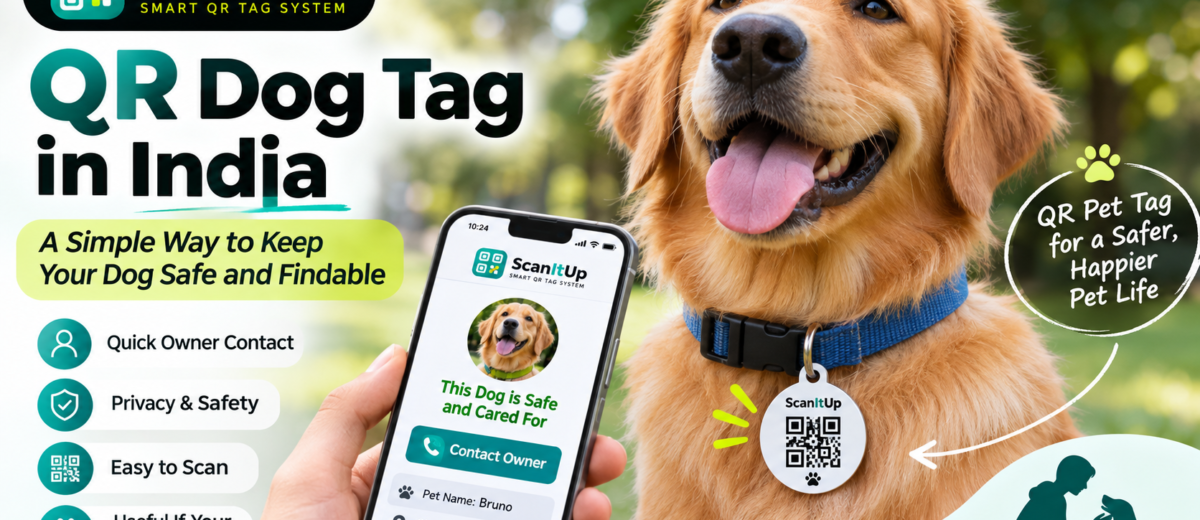
A dog can be out of sight in seconds. When that happens, the most useful identification is the kind a stranger can understand immediately. A QR dog tag in India can give someone who finds your pet a way to contact you, but it works best when you understand its limits and set it up carefully. Here is what to put on the tag, how to test it, and when other identification methods are worth using alongside it.
Why a QR dog tag matters even for a careful owner
Dogs can slip through an open gate, pull away during a noisy walk, or become separated from a family during travel. A collar tag is one of the simplest ways to help a finder identify the animal and contact someone responsible for it. A QR dog tag adds a scannable route to a contact page, which can be useful when you want to update details without printing a new metal tag each time. It is not a substitute for supervision, secure fencing, or a dependable recall. It is one more layer of identification that can reduce confusion during an already stressful moment.
What is a QR dog tag?
A QR dog tag is a physical tag, usually attached to a collar or harness, with a printed QR code. When someone scans the code using a phone camera, it can open a web page containing information chosen by the owner. Depending on the provider and its settings, that page may show the dog’s name, a safe contact method, basic handling notes, or a way to message the owner. The code itself is not a GPS device. It does not broadcast a dog’s location, and scanning requires someone to find the dog and actively use the code. That distinction is important when comparing pet identification products.
What information should you include?
Think like the stranger who might find your dog outside an apartment gate or near a park. They need to know how to contact you, whether the dog is approachable, and whether there is an urgent handling concern. A dog’s name and one reliable contact route are usually a useful starting point. You might add ‘nervous around traffic’ or ‘please keep on a lead’ if relevant. Avoid publishing your full home address or unnecessary personal information. If your provider allows private messaging, check how it appears to someone who is not logged in. Never assume a setting is private until you test the public page yourself.
QR dog tag India: practical situations
In Indian cities, a lost dog may be noticed by a security guard, shopkeeper, neighbour, or someone walking in a public park. A clear ‘Scan to contact owner’ instruction can help a finder understand the tag without knowing the brand. In apartment societies, it can also be useful to tell building staff that the dog wears a QR tag and how to use it. In smaller towns or places with inconsistent mobile data, an engraved phone number may still be helpful as a backup. The right setup depends on your dog’s behaviour, your neighbourhood, and how easily people can access the internet.
QR dog tag versus a traditional engraved tag
An engraved tag has one major advantage: a finder can read the contact details immediately, without a smartphone or mobile data. Its limitation is that changing a phone number usually means replacing the tag. A QR tag can point to information that may be updated through an online service, but it depends on the page remaining available and on someone scanning the code. For many owners, using both is sensible: a simple visible phone number or alternative contact route plus a QR page for additional information. Keep the physical tag lightweight, smooth-edged, and securely attached.
QR tag versus GPS tracker
A GPS tracker is an electronic device that may estimate or report location through satellite positioning and a communication connection. Its performance depends on the product, battery, signal conditions, subscription, and coverage. A QR tag has no battery and does not track movement; it helps a person who encounters the dog reach the owner. These tools answer different questions. A tracker may help you search for a dog, while an identification tag helps someone else return the dog. Neither guarantees recovery. Choose based on your dog’s escape risk, daily routine, budget, and comfort wearing the device.
What about microchipping?
A microchip is another form of identification, typically implanted by a veterinary professional. It carries an identifier that can be read using a compatible scanner, and its usefulness depends on current registration and contact records. A passerby usually cannot read it with an ordinary phone camera. A QR collar tag is more immediately accessible to a finder with a smartphone, but collars can come off. That is why a collar tag and a properly registered microchip can complement each other rather than compete. Ask your veterinarian about local availability, suitable registration, and the process for updating ownership details.
How to choose a comfortable tag
Start with your dog’s size and activity level. A large, heavy tag can be annoying on a small dog, while a flimsy attachment may fail during rough play. Look for rounded edges, a secure split ring or attachment, and a surface that resists everyday scratches. Make sure the QR pattern remains visible rather than rubbing against several other dangling charms. Some dogs do better with a flat tag mounted close to the collar. Check that the collar itself fits correctly and does not catch on objects. If your dog chews tags, ask a veterinarian or experienced trainer about safer attachment options.
How to set up a QR dog tag step by step
First, choose a QR identification service and read what its public page shows. Register or activate the tag according to the provider’s instructions. Add your dog’s name, a contact method that you actually check, and any brief handling note that would help a finder. Save the profile, then scan the physical tag using a phone that is not signed into your account. Confirm that the link opens quickly and that the message or contact button works. Ask a trusted friend to test it too. Finally, attach the tag securely and check it after the first few walks. A tag that was activated but never tested is not ready for an emergency.
Make the contact page easy for a stranger
Imagine finding a friendly dog beside a busy road. You are unlikely to spend several minutes navigating a complicated website. A good identification page should make the next action obvious: ‘Contact owner’ or ‘Report found dog’. Keep instructions short. If the service supports messaging without exposing your personal number, test that privacy feature carefully. If it requires a login, special app, or payment from the finder, consider whether that creates too much friction. The best setup is the one a stranger can understand quickly, even if they have never seen a QR pet tag before.
What to do when your dog goes missing
Begin by checking nearby exits, stairwells, parking areas, and familiar walking routes while keeping your own safety in mind. Tell family members, building security, and nearby neighbours what the dog looks like and when it was last seen. Share a clear recent photo and a reliable contact method in appropriate local community groups, but avoid publicly posting unnecessary private information. Contact local shelters, veterinarians, and animal rescue groups where available. If your dog has a QR profile, verify that its contact information is correct and monitor messages. A tag is useful only if you respond when someone reaches out.
What should a finder do after scanning?
Approach cautiously. Even a normally gentle dog may be frightened, injured, or defensive. Do not chase a dog into traffic or attempt to handle an aggressive animal. If it is safe, read the collar, scan the tag, and contact the owner through the available method. Describe the location and the dog’s condition without posting an exact address publicly. If the animal is injured or unsafe to approach, contact an appropriate local veterinarian, animal welfare organisation, or municipal service instead. A QR page can help connect people, but it cannot replace sensible handling and animal welfare precautions.
Common mistakes that reduce a tag’s usefulness
The biggest mistake is letting contact details go out of date. Another is placing the tag where fur, other charms, or the collar buckle covers the QR code. A damaged print may not scan reliably. Owners sometimes add too much information, including private addresses or medical claims that a stranger cannot interpret. Keep the profile focused on safe contact and basic care notes. Test it after changing phones, email addresses, or privacy settings. If the service offers scan notifications, understand what they mean: a scan is not proof that the dog is safe or that the person scanning has custody of the animal.
How often should you check the tag?
A quick scan once a month is an easy habit, and it is especially useful before a trip or after changing contact details. Look for scratches, a loose ring, or a tag that has become hard to read. Open the page from a phone without your account logged in. Confirm that messages reach the right person and that the backup contact still works. If your dog spends time with a walker, sitter, or boarding facility, make sure the people caring for it know how the tag works. A few minutes of maintenance can prevent a confusing contact failure later.
Using Scan It Up for pet identification
Scan It Up offers QR-based identification workflows that owners may consider for pet tags. Before buying or activating a tag, check the current product options, any plan limits, and the privacy controls available for your chosen tag. Make sure the public page is suitable for a finder and that the contact route works in practice. Do not assume that a QR service includes live GPS tracking, veterinary records, or emergency response. If your goal is to help someone return a found dog, prioritise a reliable contact path, a readable tag, and up-to-date information over a long list of features.
Frequently asked questions
Does a QR dog tag work without internet?
The printed tag does not need power, but opening an online QR profile generally requires a working internet connection. A visible engraved contact detail can be a useful backup.
Can a QR tag show my dog’s live location?
No. A QR code is not a GPS tracker. It can help a finder contact you after scanning.
Should I put my address on the tag?
Usually, a reliable contact method is more appropriate than displaying your full home address publicly.
Can puppies wear QR tags?
They can wear appropriately sized identification, but the attachment should be lightweight, secure, and checked for comfort and chewing risk.
Is a QR tag better than a microchip?
They serve different purposes. A QR tag is easy for a phone user to scan; a registered microchip offers identification if the collar is lost and a suitable scanner is available.
The bottom line
A QR dog tag in India is best understood as a practical contact tool, not a promise that a lost pet will be found. Choose a readable, comfortable tag; protect your personal information; test the public contact page; and keep a backup identification method where practical. Combined with careful supervision and a plan for what to do if your dog disappears, a simple tag can make it easier for a helpful stranger to take the right next step.
