
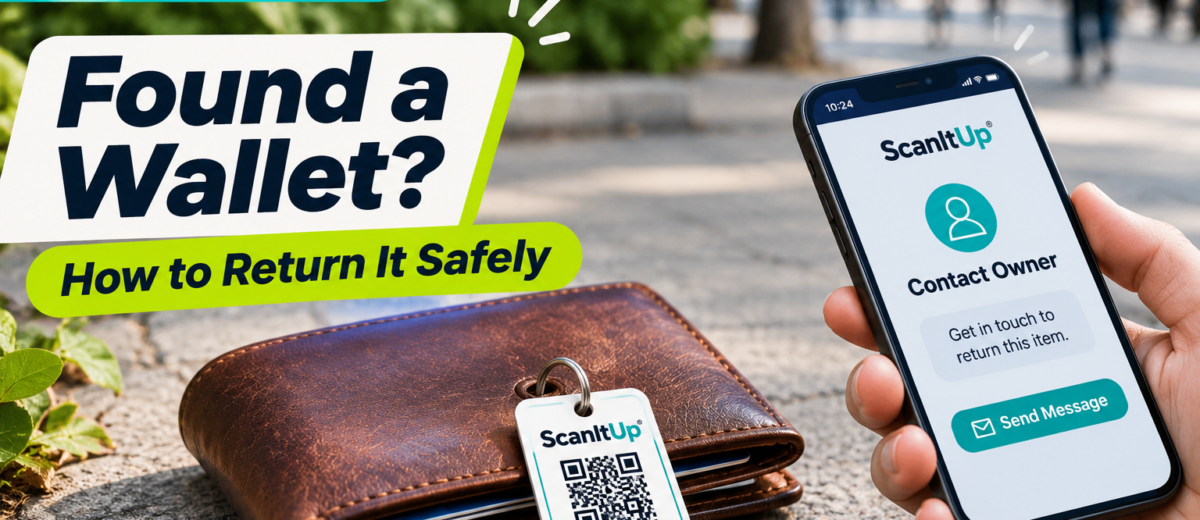
Finding someone else’s wallet can feel like a small emergency. Here is a clear guide to what to do if you find a wallet, including how to protect the owner’s privacy, contact them safely, and use a QR return tag when one is present.
You found a wallet. What should you do first?
Finding a wallet on a footpath, in a shop, or on public transport creates an awkward moment. You want to help, but you may not know who owns it or how to return it without putting yourself or the owner at risk. The best approach is calm and practical: leave the contents intact, note where you found it, and choose a safe, verifiable handover route. A wallet may contain bank cards, identification documents, cash, and personal photographs. Treat all of them as private, even if you only intend to help.
Check your surroundings before moving it
Look around to see whether someone has just dropped the wallet. If a person nearby is searching the ground or asking about a missing wallet, you can approach carefully and ask them to describe it before showing it. Avoid announcing the amount of cash or revealing the owner’s name to a crowd. If you find the wallet inside a store, restaurant, railway station, office, or other managed property, staff or the designated lost-property desk may be the safest first contact. Ask for a receipt or a record of the handover where available.
Do not post identity cards or bank details online
A well-meaning social media post can expose sensitive information. Do not photograph or publish an Aadhaar number, PAN, driving licence, bank card, address, date of birth, or other identifying details. Even a partly covered document can reveal enough to invite misuse. A public message such as ‘Wallet found near the library entrance; contact the building reception with a description’ is much safer than a photo of its contents. If you need to identify the rightful owner, ask for details they should know without telling them the answers first.
Can a QR return tag help?
Some wallets have a QR sticker, card, or tag that opens a return-contact page. If you see a clearly marked tag, scanning it can be one option for contacting the owner. Check the destination before sharing information and avoid pages that request your passwords, payment card details, or unusual fees. A QR code does not locate the wallet through GPS, and it does not prove that the person responding is the owner. It is simply a possible contact channel. If the page offers a message form, explain where you found the wallet without uploading photographs of its documents.
What to say when contacting the owner
Keep your message short and neutral: ‘I found a wallet near the main entrance of the shopping complex around 4 pm. It is with the reception desk. Please contact the desk and describe the wallet to collect it.’ Avoid saying exactly what is inside. If you are arranging a direct return, agree on a public, staffed location and consider taking another trusted person along. Never feel obliged to visit a private home, travel a long distance, or share your own address. A safe return is more important than a dramatic reunion.
Verify ownership without sharing private information
A person claiming the wallet should be able to describe its appearance, approximate contents, or another nonpublic detail. You might ask the colour, brand, or an item they know is inside. Do not ask someone to send their full Aadhaar number, a photograph of their bank card, or a one-time password. If a managed lost-property office or police desk is handling the item, follow its verification procedure. Do not use the wallet’s cards or attempt transactions to identify the owner; that creates unnecessary risk.
When to hand the wallet to staff or police
A staffed location often has established procedures for found property. If the wallet was found on a bus, train, or at an airport, contact the operator’s official lost-property channel. If it was found on the street and no suitable nearby facility can take responsibility, contact the local police station for guidance. Procedures can vary by jurisdiction, so avoid assuming that every place follows the same timeline. Record the handover date, location, and the name or reference number of the receiving office if provided. This protects both the finder and the owner.
What if there is cash inside?
Do not spend, borrow, remove, or rearrange the money. The safest choice is to keep the wallet and its contents together while arranging an official handover. If staff are documenting the item, they may count the cash according to their policy; ask for a written acknowledgement when possible. Do not publish the amount online. It can be used as a private verification detail later, but only through a trusted handover process. Resist offers to split the cash as a ‘reward’ or to keep it because nobody seems to be looking.
Be alert to scams and unsafe requests
Unfortunately, a found-wallet situation can attract dishonest claims. Someone might demand delivery to a secluded place, ask you to pay a courier fee, or send a suspicious link. You do not need to comply. Never share an OTP or approve a payment request to prove you found a wallet. If a person becomes threatening, end direct contact and use a staffed or official handover route. Likewise, if the wallet contains suspicious items or you feel unsafe handling it, contact local authorities rather than investigating on your own.
If the wallet belongs to a child or older adult
Take extra care when the apparent owner may be vulnerable. A school identification card may suggest that a school office is an appropriate contact, but do not publish the child’s name, school details, or photograph online. For an older adult, a printed emergency contact card might offer a safe way to notify family, but do not assume the person has a medical condition. Use respectful, minimal communication and avoid sharing sensitive information beyond those directly involved in the return.
How businesses can handle found wallets
Shops, cafés, and apartment receptions benefit from a simple process. Designate a secure place for found items, record where and when each item was handed in, restrict access, and require a reasonable ownership check before release. Train staff not to photograph identity documents on personal phones or post the contents to social media. A brief written log can prevent confusion between shifts. If a QR tag is present, staff can use it to notify the owner while still following the business’s existing lost-property rules.
How to make your own wallet easier to return
You cannot control where a wallet will be lost, but you can make safe contact easier. Consider adding a small return card with a dedicated email address or a privacy-conscious QR contact tag. Avoid printing your home address, full identity number, or detailed personal information on the outside. Test the contact route from another phone and keep it updated. Store an inventory of essential cards securely at home so you know what to block if the wallet goes missing. A return tag complements sensible precautions; it does not replace card security or official reporting.
A quick example: wallet found in an apartment lobby
Imagine a resident notices a brown wallet near the lift. Rather than sharing a photograph of the owner’s driving licence in the building’s large messaging group, they hand it to the security desk and ask staff to record the time and place. If a QR return card is visible, the desk may send a brief message saying the wallet is held securely. The person collecting it describes the wallet and follows the building’s procedure. This is a straightforward process that protects privacy and avoids unnecessary direct exchanges.
Frequently asked questions
Should I open a wallet I find?
Handle it as little as possible. If you need to look for a safe return contact, avoid exposing or copying private information.
Can I post a found ID card on social media?
Do not post readable identity documents or financial details. Use a general found-item notice instead.
Does a QR wallet tag track its location?
No. A QR code by itself is not a GPS tracker. It may provide a contact route when someone scans it.
What if two people claim the same wallet?
Do not guess. Transfer the item to an appropriate staffed lost-property service or local authorities for verification.
Should I ask for a reward?
Do not make return conditional on payment. Focus on a safe, documented handover.
The bottom line
If you find a wallet, protect the contents, avoid public disclosure of personal details, and choose a safe way to reach the owner. A QR return tag can make contact simpler when one is present, but verification and careful handling still matter. Whether you are an individual finder, a shop employee, or a building receptionist, the goal is the same: help the wallet get home without creating a new privacy or safety problem.
